WILSONELECTRONICS.COM, WILSONPRO.COM AND ZINWAVE.COM ARE NOW WILSONCONNECTIVITY.COM

5 Unexpected Things Blocking Your Cell Coverage
January 3, 2023
Wireless Solutions to Improve Cellular Coverage for Your Enterprise
Free Downloadable Guide
Poor cell reception is often blamed on things like distance from towers and thick walls. But several surprising everyday factors could be secretly sabotaging your signal strength. Check out these hidden signal blockers and learn how to overcome them for better connectivity.
Unfortunately, there are many culprits that can block cell phone signal. Here are 5 surprising ones that you may not be aware of:
Strain on bandwidth. The more apps you have on your phone, the more bandwidth it will require. Often, apps are not closed and continue running in the background, eating up bandwidth and signal. Free apps and games can be particularly big bandwidth hogs because they are usually filled with advertisements. Notifications from all of these apps can also drain your signal.
Mother Nature. Hills, mountains, bluffs, canyons, heavy vegetation, and even weather can kill your cell signal.
Glass/windows. When cell phone users lose signal or drop a call inside of a building, it can seem instinctive to move near a window. After all, it would stand to reason that there would be fewer signal impediments through glass than other, more dense building materials. A type of energy efficient window that many buildings utilize is called Low-E glass, which contains a coating of metal oxide that helps block light from entering. One disadvantage of Low-E glass is that it can also repel cell signal and prevent it from coming into a building. Many new buildings are now constructed to be a “green building”, which means they keep environmental and LEED standards at the forefront of the design. Read here about an apartment building that suffered from poor cell signal due to eco-friendly building materials and what they did to solve the issue.
Network traffic. In this day and age, we often assume there’s plenty of cell coverage to go around. However, in densely populated areas where many people are using their devices for calling, posting to social media, or uploading and downloading files, it’s not uncommon for cell signal to be slow or nonexistent. If you’ve ever been trying to post a concert photo to Instagram or send an email during a big work conference only to find you can’t, it’s likely due to the fact that too many people are competing for bandwidth in a single area.
Fiberglass insulation. While it’s not surprising that common building materials such as concrete, steel, brick and wood are cell signal killers, you may not expect to find fluffy pink stuff on the list of things that impede signal. While fiberglass insulation isn’t particularly dense compared to these other materials, it is still composed of substances that repel signal. Just as it keeps heat and cold in, it is also very good at keeping cell signal out.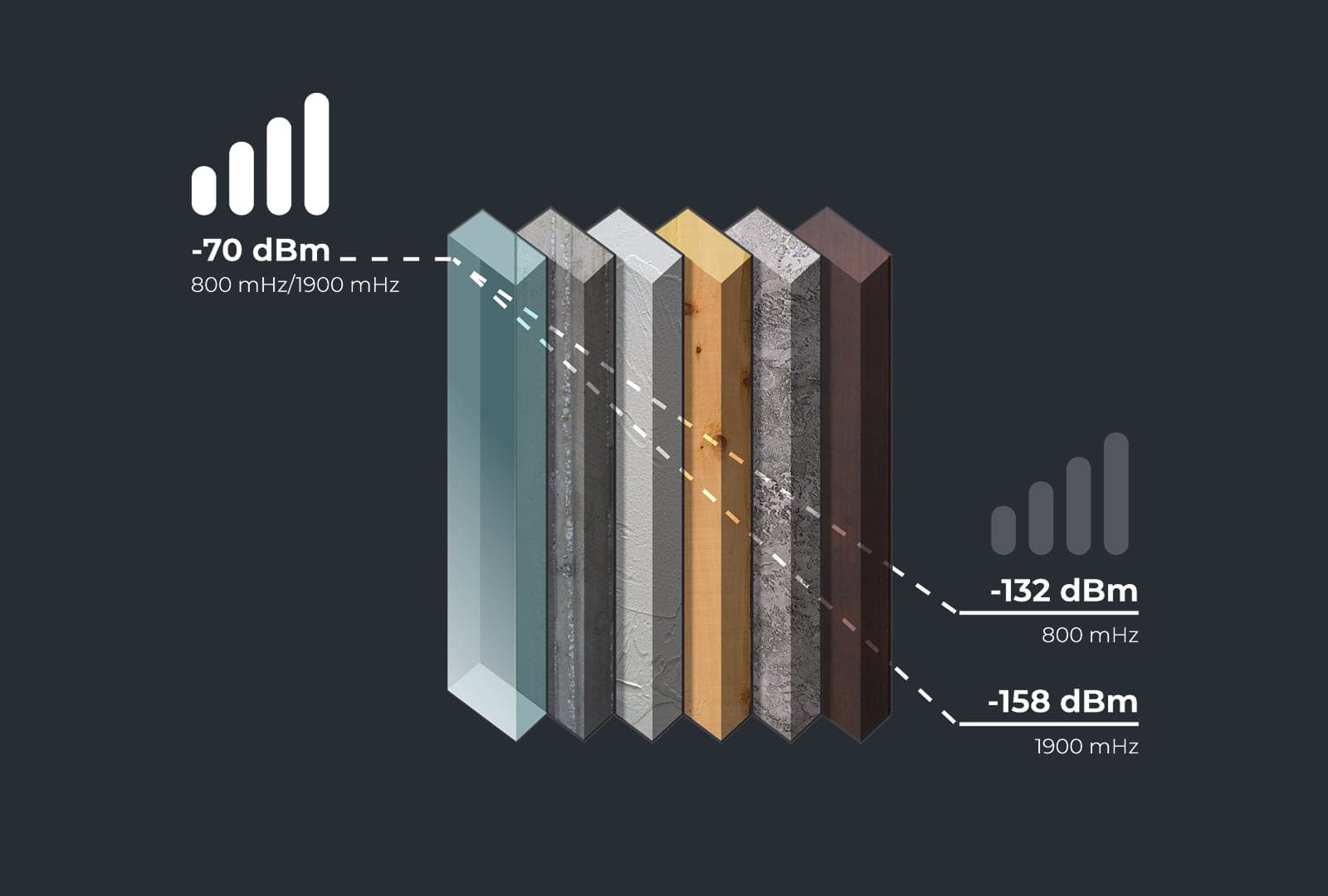
Cell phone signal strength is measured in decibels (dBm). Signal strengths coming from various networks range from about -30 dBm to -120 dBm, and the closer to zero the decibels are, the stronger the cell signal. A signal better than -85 dBm is considered to be good cell phone signal strength.
Call quality is actually a far more accurate measure of cell signal strength than the bars on your cell phone because there is no industry standard for what a bar represents or whether it measures your 5G or 4G LTE performance. Therefore, bars will indicate a different level of coverage from carrier to carrier. You can also enlist the help of a professional integrator, who can perform a site survey in your building using a tool called a signal meter to determine the quality of your signal with absolute certainty.
Wilson Connectivity cellular amplifier systems work to amplify signal exactly where you need it by as much as 32 times. These solutions are carrier-agnostic, meaning signal can be improved regardless of the cell towers in your area or which specific carrier network your device is operating on. To learn more about how Wilson Connectivity can help improve cellular signal in your residential or commercial space, contact us today.
What can interfere with cell phone signal?
The signal coming from cell towers is what connects one user to another, regardless of the cellular carrier they’re using. Signal between cell towers and devices works in much the same way that two-way radios function. When you’re talking on a cell phone, your voice is converted to a signal that’s transmitted via radio waves to the nearest cell tower. The tower relays the radio wave back by converting it to sound.Unfortunately, there are many culprits that can block cell phone signal. Here are 5 surprising ones that you may not be aware of:
Strain on bandwidth. The more apps you have on your phone, the more bandwidth it will require. Often, apps are not closed and continue running in the background, eating up bandwidth and signal. Free apps and games can be particularly big bandwidth hogs because they are usually filled with advertisements. Notifications from all of these apps can also drain your signal.
Mother Nature. Hills, mountains, bluffs, canyons, heavy vegetation, and even weather can kill your cell signal.
Glass/windows. When cell phone users lose signal or drop a call inside of a building, it can seem instinctive to move near a window. After all, it would stand to reason that there would be fewer signal impediments through glass than other, more dense building materials. A type of energy efficient window that many buildings utilize is called Low-E glass, which contains a coating of metal oxide that helps block light from entering. One disadvantage of Low-E glass is that it can also repel cell signal and prevent it from coming into a building. Many new buildings are now constructed to be a “green building”, which means they keep environmental and LEED standards at the forefront of the design. Read here about an apartment building that suffered from poor cell signal due to eco-friendly building materials and what they did to solve the issue.
Network traffic. In this day and age, we often assume there’s plenty of cell coverage to go around. However, in densely populated areas where many people are using their devices for calling, posting to social media, or uploading and downloading files, it’s not uncommon for cell signal to be slow or nonexistent. If you’ve ever been trying to post a concert photo to Instagram or send an email during a big work conference only to find you can’t, it’s likely due to the fact that too many people are competing for bandwidth in a single area.
Fiberglass insulation. While it’s not surprising that common building materials such as concrete, steel, brick and wood are cell signal killers, you may not expect to find fluffy pink stuff on the list of things that impede signal. While fiberglass insulation isn’t particularly dense compared to these other materials, it is still composed of substances that repel signal. Just as it keeps heat and cold in, it is also very good at keeping cell signal out.
What materials block cell phone signals?
See this chart below for how much signal is lost (dB) for each type of building material. This is why you might experience slow data and dropped calls while indoors.How can you measure the signal you’re getting to your phone?
If you want to test your cell signal to determine if one of these things is impeding it, it’s helpful to understand how signal is measured in order to accurately determine the signal strength you’re receiving. (Spoiler alert: You won’t get an accurate measure of signal by looking at the bars on your cell phone.)Cell phone signal strength is measured in decibels (dBm). Signal strengths coming from various networks range from about -30 dBm to -120 dBm, and the closer to zero the decibels are, the stronger the cell signal. A signal better than -85 dBm is considered to be good cell phone signal strength.
Call quality is actually a far more accurate measure of cell signal strength than the bars on your cell phone because there is no industry standard for what a bar represents or whether it measures your 5G or 4G LTE performance. Therefore, bars will indicate a different level of coverage from carrier to carrier. You can also enlist the help of a professional integrator, who can perform a site survey in your building using a tool called a signal meter to determine the quality of your signal with absolute certainty.
What can you do to boost your cell signal?
If you’re frustrated by poor cell signal, you’re not alone. But the good news is, even in areas with poor reception, cell signal can be improved. Cell phone signal boosters work with existing strong cell signal to capture and amplify it in specific areas. These boosters can be installed anywhere signal needs to be improved.Wilson Connectivity cellular amplifier systems work to amplify signal exactly where you need it by as much as 32 times. These solutions are carrier-agnostic, meaning signal can be improved regardless of the cell towers in your area or which specific carrier network your device is operating on. To learn more about how Wilson Connectivity can help improve cellular signal in your residential or commercial space, contact us today.
Featured & Trending Now
Six Ways to Solve In-Building Wireless: How to Figure Out Which One You Actually Need